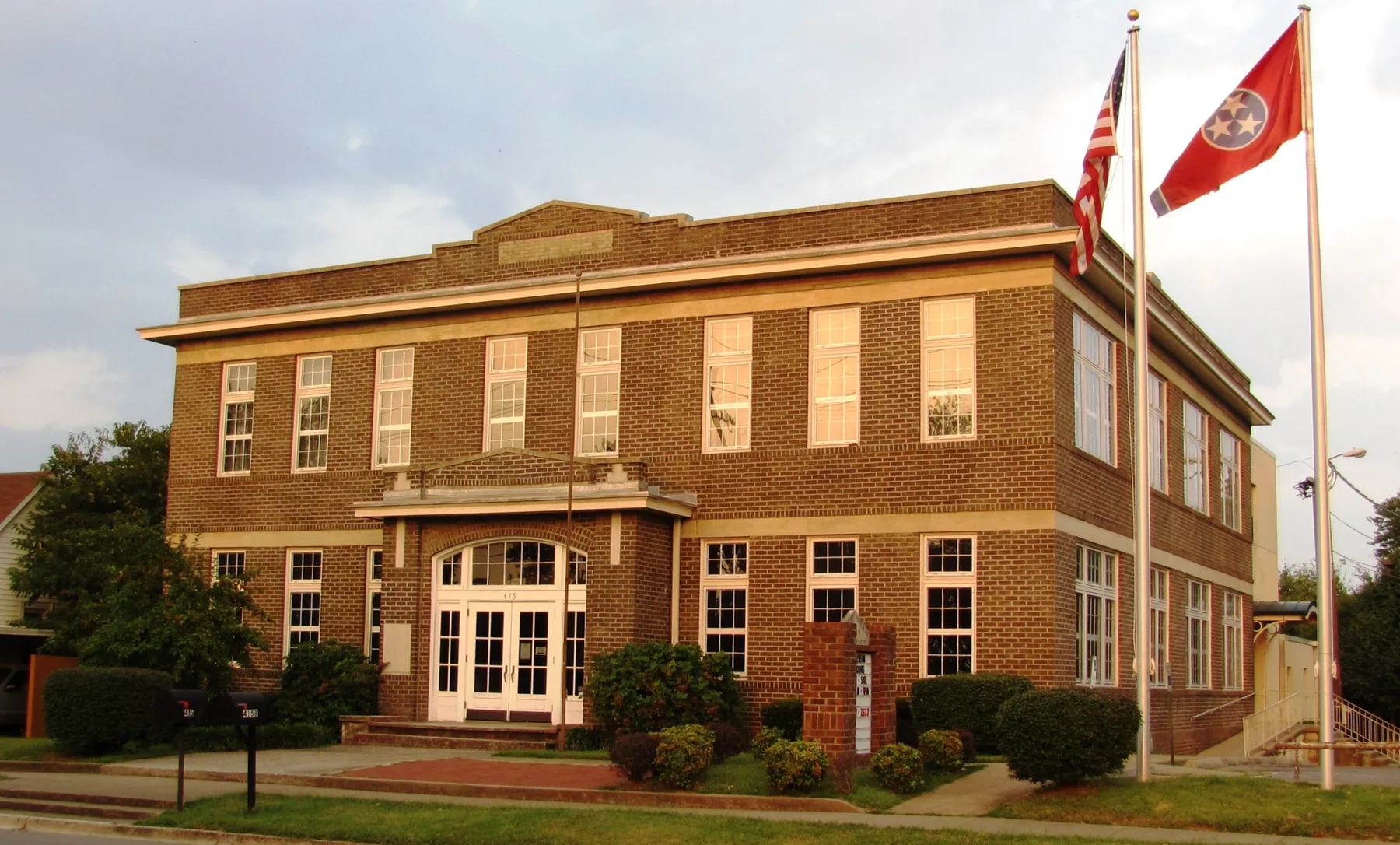
Murfreesboro was laid out in 1811, chartered in 1817 and was Tennessee's capital from 1818 to 1826. Its 30 National Register sites, museums and hours.
Last checked Oct. 19, 2026. The founding story comes from the city’s History of Murfreesboro page; National Register listings from the National Park Service’s National Register data download (file dated May 22, 2026); hours from each site’s own page.
Murfreesboro was laid out in 1811 as the new seat of Rutherford County, recognized as a city in 1817 and served as Tennessee’s capital from 1818 to 1826. Today 30 properties with a Murfreesboro address are on the National Register of Historic Places, led by Stones River National Battlefield.
Who to call
- Stones River National Battlefield: 615-893-9501
- Oaklands Mansion: 615-893-0022
- Bradley Academy Museum: 615-962-8773
- Cannonsburgh Village: 615-890-0355
How Murfreesboro began
According to the city’s history:
- 1811: The Tennessee legislature appointed a committee to choose a new site for the Rutherford County seat. It picked 60 acres belonging to Capt. William Lytle.
- The name: The General Assembly first called the town Cannonsburgh, for Newton Cannon, a young Williamson County politician. A month later, at Lytle’s request, it became Murfreesboro, in memory of his friend Col. Hardy Murfree.
- 1817: The legislature recognized Murfreesboro as an official city.
- 1818 to 1826: Murfreesboro was the capital of Tennessee, chosen for its central location, until Nashville regained the title in 1826.
- By 1853: Three colleges and several academies earned it the nickname “Athens of Tennessee.”
- 1907 and 1911: Tennessee College for Women opened in 1907; Middle Tennessee State Normal School, for training teachers, opened in 1911. It is now Middle Tennessee State University.
- After World War II: The economy shifted from farming to industry and manufacturing. The population grew from 44,922 in 1990 to 68,816 in 2000; the city puts it at more than 157,000 today. See our population guide.
The city’s pioneer village is named for that first name: Cannonsburgh Village.
The Civil War
The National Park Service says the Battle of Stones River began on the last day of 1862 and became one of the bloodiest conflicts of the Civil War, with important military and political gains for the Union. After it, Union troops built Fortress Rosecrans between January and June 1863, which the city calls the largest enclosed earthen fortification built during the war. A 0.9-mile greenway loop passes its remaining earthworks. See our parks and trails guide.
Historic districts
- East Main Street Historic District (listed 1985): roughly East Main, East Lytle, College, University and East Vine streets, 41 acres.
- North Maney Avenue Historic District (1985): bounded roughly by North Maney and North Highland avenues, East College Street and North Academy Avenue, 43 acres.
- The Public Square, around the 1859 Rutherford County Courthouse (listed 1973), is the heart of downtown, run as a Main Street district by Main Street Murfreesboro, 615-895-1887.
National Register of Historic Places in Murfreesboro
Every listing in the National Park Service’s data with a Murfreesboro address, by the year it was listed. Some are in the countryside outside the city limits.
| Listed | Property | Address (as listed) |
|---|---|---|
| 1966 | Stones River National Battlefield | 3501 Old Nashville Highway |
| 1970 | Oaklands | North Maney Avenue |
| 1973 | Collier-Crichlow House | 511 E. Main St. |
| 1973 | Elmwood (boundary enlarged in 2007) | 5722 Old Nashville Highway |
| 1973 | Marymont | 1126 Rucker Lane |
| 1973 | Gen. Joseph B. Palmer House | 434 E. Main St. |
| 1973 | Rutherford County Courthouse | Public Square |
| 1974 | Fortress Rosecrans Site | west of town at the Stones River |
| 1979 | Childress-Ray House | 225 N. Academy St. |
| 1984 | Boxwood (Thomas J.B. Turner House) | Old Salem Pike |
| 1985 | East Main Street Historic District | East Main and nearby streets |
| 1985 | North Maney Avenue Historic District | North Maney and nearby streets |
| 1990 | Bradley Academy | 415 S. Academy St. |
| 1990 | Walter Hill Hydroelectric Station | U.S. 231 at the Stones River |
| 1992 | Arnold-Harrell House (Daffodil Hill) | 1710 E. Main St. |
| 1992 | Rutherford Health Department | 303 N. Church St. |
| 1993 | First Presbyterian Church | 210 N. Spring St. |
| 1993 | Landsberger-Gerhardt House | 435 N. Spring St. |
| 1993 | Middle Tennessee State Teachers College Training School | 923 E. Lytle St. |
| 1993 | Robert Andrew Smith Farm | 2568 Armstrong Valley Road |
| 1995 | Allen Chapel A.M.E. Church | 224 S. Maney Ave. |
| 1995 | Enoch H. Jones House | 6339 Halls Hill Pike |
| 1996 | Thomas C. Black House (Evergreen) | 4431 Lebanon Road |
| 1999 | Beesley Primitive Baptist Church | 461 Beesley Road |
| 2003 | Logan Henderson Farm | 3600 Manchester Pike |
| 2004 | John C. Spence House | 503 N. Maple St. |
| 2012 | Murfreesboro Veterans Administration Hospital Historic District | 3400 Lebanon Pike |
| 2012 | Old First Presbyterian Church and Old City Cemetery | 390 E. Vine St. |
| 2022 | Benevolent Cemetery | Park Avenue |
| 2022 | Cemetery School | Mount Olive Road |
Museums and sites you can visit
- Stones River National Battlefield, 3501 Old Nashville Highway: battlefield, visitor center and Stones River National Cemetery. Call 615-893-9501 for hours.
- Oaklands Mansion, 901 N. Maney Ave., in Oaklands Park: self-guided tours Tuesday through Friday; reservations recommended, walk-ins accepted; check its calendar for weekends. 615-893-0022.
- Bradley Academy Museum and Cultural Center, 415 S. Academy St.: the city says the academy began in 1806 as a school for white boys, admitted African American students from 1884, and moved into the current building, which opened in 1918 as the school for African American students. It has an original classroom and an early settlers exhibit. Open Friday and Saturday, 10 a.m. to 4 p.m. 615-962-8773.
- Cannonsburgh Village, 312 S. Front St.: about 100 years of Tennessee life, from the 1830s to the 1930s, with a gristmill, schoolhouse, general store, blacksmith shop, museum and the World’s Largest Cedar Bucket. Self-guided tours are free; call ahead, since the village may be closed for a private rental. 615-890-0355.
- Old City Cemetery, 390 E. Vine St., on the grounds of the Old First Presbyterian Church.
- Benevolent Cemetery, Park Avenue, listed in 2022 for its Black heritage.
Learn more
The Rutherford County Historical Society publishes research on county people, places and stories, including the Ransom School House.
More guides: parks and trails, things to do and population and growth.
Frequently asked questions
When was Murfreesboro founded?
In 1811 the Tennessee legislature appointed a committee to pick a new county seat, which chose 60 acres owned by Capt. William Lytle. The state recognized Murfreesboro as a city in 1817.
Was Murfreesboro the capital of Tennessee?
Yes. The city says Murfreesboro was named the state capital in 1818 because of its central location, and Nashville regained the title in 1826.
Who is Murfreesboro named after?
Col. Hardy Murfree, a friend of William Lytle. The town was first named Cannonsburgh, after Newton Cannon, and renamed Murfreesboro a month later at Lytle’s request.
How many National Register sites are in Murfreesboro?
The National Park Service’s May 2026 data lists 30 National Register of Historic Places properties with a Murfreesboro address, from Stones River National Battlefield (1966) to the Benevolent Cemetery and Cemetery School (both 2022).
Have your say